


In the Confucian tradition, two central concepts shape the ideal of human virtue: Ren and Li.
Ren is the inner moral quality of a person—the substance of virtue, the fullness of humanity.
Li is the outward expression of that inner virtue—the structured practice of living rightly in the world.
Together, they form the ideal of who we are to become (Ren) and how we are to live (Li). In Platonic terms, they reflect the ultimate Form of a person and their life.
Ren without Li becomes chaos—pure virtue without expression, like a wellspring never channeled.
Li without Ren becomes mechanical—obedience without soul, habit without heart.
Just as faith without works is dead, and works without faith are hollow, so too must Ren and Li exist in harmony.
The path toward this harmony is not paved with force, violence, or brute strength. Rather, it is walked through selflessness, consistency, and internal resistance to disorder—both moral and practical. The man of strength is not the one who conquers others, but the one who conquers himself.
True strength is in resisting the collapse of inner structure. It is in laboring against laziness, distraction, and temptation. It is in taking responsibility—daily, joyfully, and faithfully—to cultivate both inward virtue (Ren) and outward expression (Li).
Across time and cultures, peace-driven traditions have sought this same truth:
Confucianism gives us Ren and Li.
Christianity gives us Virtue and the battle against Vice.
The Orthodox Church gives us Theosis—to become godlike through communion with God.
All of these paths, insofar as they are true, point toward the same end: that man becomes what he was created to be—like God.
Confucianism shares in this truth by leading its followers toward the pinnacle of human virtue. It urges people to become fully human, which is to become godly. In Christian terms, this is not foreign—it is the very heart of our faith:
“God became man so that man might become god.” (St. Athanasius)
We see in Christ the ultimate Form that Plato could only philosophize about:
He is the perfect embodiment of Ren—a soul in perfect communion with God, overflowing with virtue.
And His life is the perfect expression of Li—a life of pure moral action, expressed in total love, sacrifice, and unwavering obedience to the will of God.
In Him, there is no contradiction between inward and outward, between truth and action, between knowing and doing. He is the fullness of humanity and the goal of all who seek to become whole.
This is the aim of Confucius. It is the call of every soul made in God’s image.
And it is only by God’s grace that we can begin to walk this path—not through our own efforts, but through synergy. We offer our willingness, our obedience, our repentance—and He provides the healing. Like a man in the gym cannot force his muscles to grow, we cannot force ourselves to become saints. But we can submit to what is good. We can obey the commands. We can train daily, trusting that the Spirit will strengthen what is weak, and water what is dry.
And here is the great deception of the modern age:
That we must struggle alone toward this pinnacle.
But the truth is the opposite.
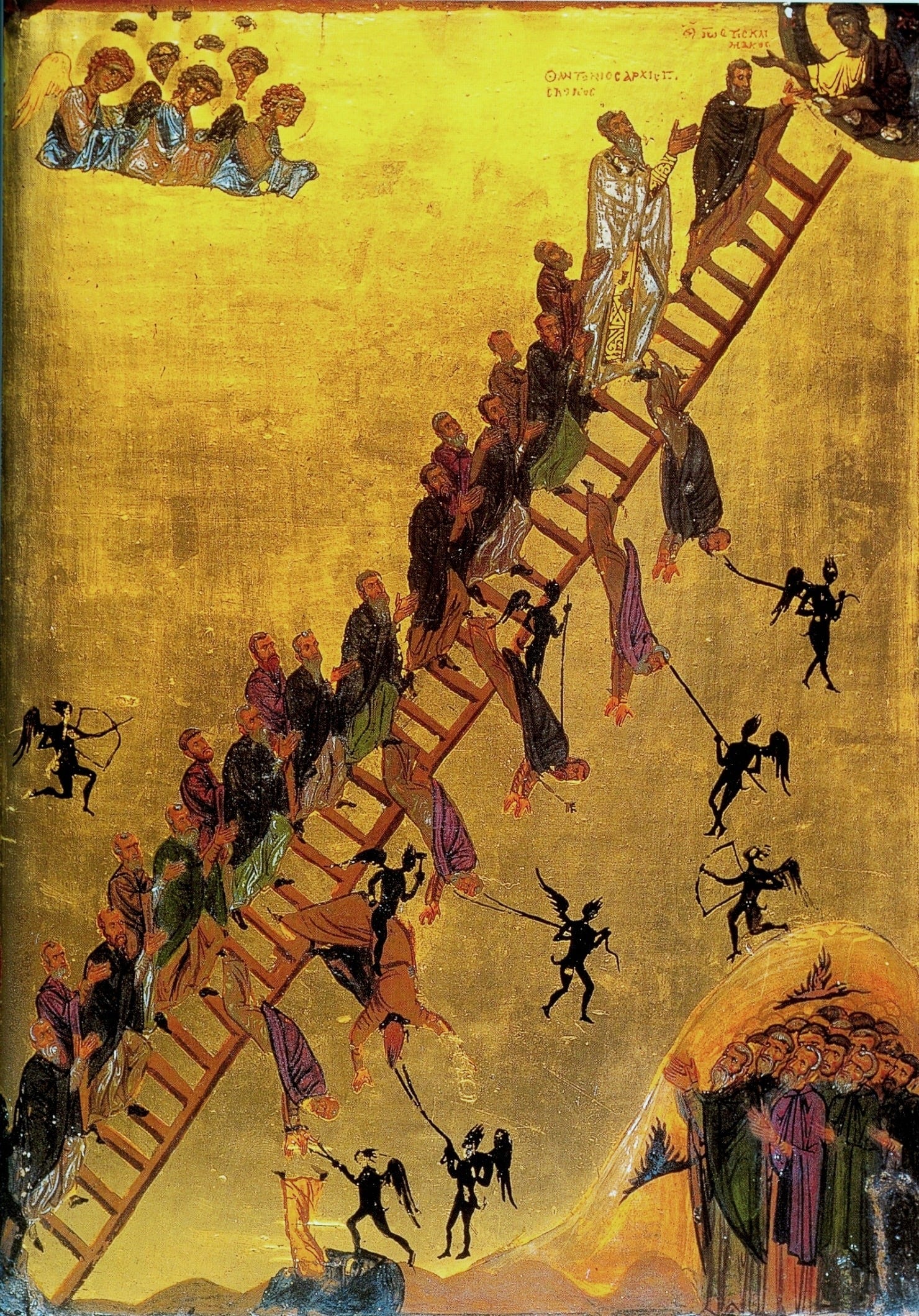
We do not climb alone.
In the beginning, we strive with God.
But as we grow, we realize: we are not climbing up—we are being lifted.
And our true struggle is no longer to ascend, but to let go of the dead weight that holds us down: pride, resentment, fear, distraction, self-will.
When we surrender, He lifts us. When we die to ourselves, He gives us life.
This is why the Church, and particularly the Orthodox Church, becomes essential. For in Orthodoxy is preserved the fullness of what has been revealed:
The way of the fathers.
The path of the saints.
The healing sacraments.
The ascetical wisdom that transforms a man, not from the outside in, but from the inside out.
Outside this fullness, we may find glimpses, shadows, or echoes of the truth. But only here do we see the whole icon. And it is Christ.
So, let Ren flourish in your soul—and Li in your life.
Let virtue blossom inwardly, and righteousness take form outwardly.
And in time, through prayer, obedience, and grace, you will find that strength was never violence—
It was selfless love, unwavering peace, and joyful struggle.